
Commercial Solar Drying Solutions in Chhattisgarh for Farmers, FPOs and Food-Processing Industries
Chhattisgarh has a diverse agricultural and horticultural economy involving paddy, maize, pulses, oilseeds, millets, vegetables, fruits, spices, medicinal plants and forest-linked produce. The state Agriculture Department identifies paddy, maize, soybean, urad and arhar among the major kharif crops, while wheat and other crops are cultivated during the rabi season. Chhattisgarh’s varied agro-climatic conditions also support fruits, vegetables, spices, plantation crops, medicinal plants and aromatic crops.
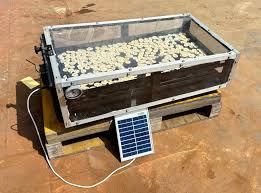
This diverse production base creates strong opportunities for cleaner post-harvest handling, moisture reduction and agricultural value addition. A Commercial Solar Dryer in Chhattisgarh can help farmers, Farmer Producer Organizations, Self Help Groups, cooperatives, rural enterprises and food-processing MSMEs reduce moisture from technically suitable products in an enclosed and organised drying environment.
A commercial solar dryer primarily performs dehydration or moisture reduction. It does not automatically mill grains, grind spices, extract oil, roast food, prepare finished powder or package products. These activities require separate processing equipment.
Why Solar Drying Is Relevant to Chhattisgarh
Chhattisgarh is widely associated with rice production, but its agricultural opportunity extends beyond paddy. Official state sources identify maize, soybean, urad, arhar and other crops as important parts of the farming system. The state horticulture department also highlights the cultivation of mango, guava, lime, litchi, cashew, sapota and various minor fruits, along with vegetables, spices, medicinal plants and aromatic crops.
Many of these products are seasonal, moisture-sensitive or perishable. Farmers and processors may face challenges such as:
Sudden arrival of large quantities during harvest
Dependence on open-sun drying
Exposure to dust, insects, birds and animals
Uneven drying caused by thick product layers
Unexpected rainfall or cloudy conditions
High humidity during parts of the processing season
Limited availability of clean drying surfaces
Repeated outdoor handling
Difficulty maintaining consistent batches
Premature packaging of incompletely dried produce
Lack of product-specific moisture measurement
Traditional open-sun drying may involve spreading products on courtyards, roadsides, rooftops, mats, tarpaulins or open ground. Although this method has a low initial equipment cost, it can create hygiene, labour, quality and weather-related limitations.
An enclosed commercial solar dryer provides a more structured approach to moisture reduction through trays, controlled loading and organised airflow.
How a Commercial Solar Dryer Works
A commercial solar dryer uses solar thermal energy to heat air and move it around a technically suitable agricultural or food product.
The basic drying process involves:
Solar radiation warming the air or heat-collection surface
Warm air entering or circulating through the drying chamber
Prepared products being loaded on trays or suitable drying surfaces
Moisture moving from the product into the surrounding air
Moisture-rich air leaving the chamber through designed outlets or forced ventilation
Depending on the model and processing requirement, the system may use:
Natural airflow
Fan-assisted airflow
Mechanically forced airflow
Hybrid heating support
The effectiveness of the drying process depends on the relationship between temperature, airflow, usable tray area, product preparation, loading depth and moisture-removal requirements.
A larger chamber does not automatically mean higher useful capacity. The manufacturer must also evaluate how evenly air reaches each tray and how much prepared product can be spread without blocking airflow.
Paddy, Rice and Grain Moisture Management
Paddy is a major crop across Chhattisgarh, while maize, wheat, pulses and millets also form part of the state’s agricultural economy. Official district-level investment documents identify rice as the principal crop in districts such as Mungeli and Mahasamund, together with pulses, maize, wheat, groundnut and millets.
A solar dryer may support moisture reduction for:
Paddy before storage or milling
Maize
Wheat
Selected millets
Urad
Arhar
Moong
Other technically suitable pulses
Selected seeds and grains
For grain applications, important factors include:
Initial moisture content
Required storage or processing moisture
Grain-layer depth
Daily fresh input
Airflow through or over the grain
Ambient humidity
Processing season
Required batch completion time
A solar dryer does not convert paddy into rice, wheat into flour or pulses into dal. Milling, dehusking, splitting and grading remain separate processes.
Buyers should also distinguish between fresh input capacity, prepared input capacity, recommended tray loading and final dried output. These values are not identical.
Maize, Pulses and Millet Applications
Maize and pulses can require moisture reduction before storage, transportation, grading, seed handling or further processing.
Potential users may include:
Individual farmers
Farmer Producer Organizations
Seed-processing units
Pulse traders
Rural warehouses
Cooperatives
Food-processing MSMEs
Common processing facilities
For maize, cob condition, shelled-grain condition, initial moisture and loading depth must be considered separately.
For pulses, the solar dryer can support moisture reduction before storage or processing. It does not split whole pulses into dal.
For millets, the system should be selected according to the grain size, daily quantity and required moisture level. Cleaning, dehusking, milling and flour production require separate machinery.
Solar Drying for Fruits in Chhattisgarh
The Chhattisgarh Directorate of Horticulture identifies mango, guava, lime, litchi, cashew and sapota among the state’s major fruit crops. The state’s agro-climatic diversity also enables the cultivation of additional horticultural products.
Suitable fruit applications may include:
Mango slices
Guava slices
Lime or citrus peel
Litchi pieces under suitable conditions
Sapota slices
Banana slices where locally available
Aonla products where relevant
Cashew-related material at technically appropriate stages
Other seasonal fruit ingredients
Fruit preparation may involve:
Sorting
Washing
Peeling
Deseeding
Slicing
Pulp preparation for suitable products
Anti-browning treatment
Blanching or pre-treatment where required
Fresh fruits often contain high moisture. Therefore, the dried output may be substantially lower than the fresh input weight.
A solar dryer may produce dried fruit slices or dried raw material for further processing. Where fruit powder is required, the dried product must be ground, sieved and packaged using separate machinery.
Vegetable-Drying Opportunities
Chhattisgarh’s horticulture sector includes substantial vegetable activity, supported by varied agro-climatic conditions and widespread farmer participation.
Potential vegetable applications include:
Tomato
Onion
Garlic
Potato
Brinjal
Okra
Cabbage
Cauliflower
Carrot
Beetroot
Green chilli
Leafy vegetables
Mixed vegetable ingredients
Vegetables must generally be cleaned and cut into uniform shapes before drying. Certain products may require blanching or another treatment to support colour, texture or rehydration quality.
A solar dryer does not fry potato or vegetable chips. Fried products require separate frying equipment and oil.
After drying, some vegetables may be used as:
Dehydrated pieces
Ready-to-cook ingredients
Soup or seasoning ingredients
Raw material for separate powder production
Ingredients for institutional kitchens or food processors
Chilli, Turmeric, Ginger and Spice Processing
Chhattisgarh’s horticultural conditions allow the cultivation of spices, medicinal crops and aromatic plants.
A commercial solar dryer may be evaluated for:
Red chilli
Green chilli after suitable preparation
Turmeric fingers
Ginger slices
Garlic
Coriander-related material where suitable
Selected spices
Medicinal leaves
Aromatic plants
The drying process must be designed to consider colour, aroma, volatile compounds, product size and final moisture.
Turmeric may require curing before drying. Ginger may require washing, peeling or slicing. Chilli must be loaded at a depth that allows sufficient airflow.
A solar dryer does not produce spice powder directly. The dried material must be separately cleaned, ground, sieved and packaged.
Strong-smelling materials such as chilli, garlic and aromatic herbs may require careful cleaning before the dryer is used for another product.
Medicinal, Aromatic and Forest-Linked Produce
Chhattisgarh has substantial tribal, forest and rural-enterprise activity. Suitable solar-drying applications may include selected medicinal leaves, herbs, flowers, roots and forest-linked produce where their handling and drying requirements are technically understood.
Potential products may include:
Medicinal leaves
Aromatic herbs
Flowers
Roots
Plant parts
Selected forest produce
Herbal ingredients
Not every forest or medicinal product should be dried using the same temperature or airflow.
Some products may be heat-sensitive, oil-rich or commercially regulated. The user should verify:
Botanical identity
Legal sourcing
Required drying temperature
Final moisture
Food or medicinal-use standards
Contamination controls
Packaging requirements
Product-specific trials and laboratory testing should be reviewed where available.
Natural, Fan-Assisted and Hybrid Solar Dryers
Natural-Airflow Solar Dryer
A natural-airflow system depends on solar heating and natural movement of warm air.
It may be suitable where:
Production targets are flexible
Weather conditions are favourable
Products can tolerate variable batch durations
Electricity availability is limited
Fan-Assisted Solar Dryer
A fan-assisted dryer uses electrical fans to improve circulation and remove moisture-rich air.
Potential benefits include:
Improved air movement
Better airflow across trays
Reduced stagnant humid air
More organised drying conditions
Fans improve airflow but do not independently generate solar heat.
Hybrid Solar Dryer
A hybrid solar dryer includes an auxiliary heat source for suitable applications.
It may be evaluated where buyers require:
Support during cloudy weather
Night-time operation
Monsoon processing
More predictable production schedules
Commercial batch continuity
Lower dependence on peak sunlight hours
The auxiliary heat source, operating temperature, fuel or electricity requirement and safety controls should be selected according to the product.
Hybrid operation should not be recommended without understanding the buyer’s actual processing requirement.
Solar Dryer Capacity Selection in Chhattisgarh
Solar-dryer capacity must be based on the exact product and process, not only a general kilogram figure.
Paddy, maize, mango slices, chilli and medicinal leaves have very different:
Bulk density
Initial moisture
Tray loading
Airflow requirement
Surface area
Preparation loss
Drying duration
Final output
Important capacity-selection details include:
Exact product name
Current product form
Fresh or wet quantity per day
Quantity per batch
Initial moisture, if known
Required final moisture
Expected dried output
Slice thickness
Loading depth
Total usable tray area
Number of operating hours
Processing season
Electricity availability
Need for hybrid support
Available installation area
Future expansion requirement
For low-density leaves or herbs, usable tray area may become a more important constraint than total weight.
For grains, airflow through the loaded material and layer depth may be more important than the number of trays alone.
Commercial Solar Dryer Price in Chhattisgarh
The price of a Commercial Solar Dryer in Chhattisgarh depends on the technical configuration and project requirements.
Cost factors may include:
Product and daily quantity
Dryer chamber size
Usable tray area
Number and size of trays
Food-contact tray material
Natural or forced airflow
Fan specifications
Sensors and monitoring
Hybrid heat source
Insulation
Control panel
Transportation
Installation location
Civil or site preparation
Electrical work
Commissioning
Operator training
Warranty
Service coverage
Spare-parts support
Buyers should confirm whether the quotation includes:
Taxes
Transportation
Loading and unloading
Installation
Foundation or anchoring
Electrical connection
Earthing
Training
Hybrid equipment
Service visits
Replacement components
The cheapest system may not be the most suitable if the usable tray area, airflow, structural design or service support does not match the intended product.
Solar Dryers for FPOs, SHGs and Rural Enterprises
A shared solar-drying facility can support value addition where several farmers or producers supply seasonal raw material.
Potential institutional users include:
Farmer Producer Organizations
Self Help Groups
Cooperatives
NGOs
Tribal livelihood programmes
Women-led enterprises
Rural food-processing units
Common facility centres
Food-processing MSMEs
Before purchasing a system, the institution should plan:
Which products will be processed
Seasonal availability
Daily collection volume
Who will operate the dryer
Batch-allocation procedure
Cleaning responsibility
Moisture-testing method
Cooling space
Packaging equipment
Storage facility
Market requirements
Maintenance records
A machine alone does not guarantee a successful processing enterprise. Product availability, operator training, packaging, quality control and market planning are equally important.
Ready-to-Use and Substantially Assembled Systems
Ready-to-use or substantially assembled systems may be useful for FPOs, SHGs and first-time commercial users because they can reduce customer-side assembly and installation confusion.
Potential advantages include:
Reduced on-site assembly
Fewer setup errors
Faster commissioning
Simpler operator training
Greater structural consistency
Clearer manufacturer responsibility
Easier handover when operators change
However, buyers should still verify model-specific requirements related to:
Transportation
Site preparation
Foundation
Electrical supply
Earthing
Commissioning
Operator training
Hybrid integration
The correct statement is that the system may be supplied substantially assembled and ready for commissioning, subject to model-specific site and operating requirements.
Cooling, Packaging and Storage After Drying
Drying is not complete merely because the outside of the product feels dry.
Before packaging, processors should evaluate:
Final moisture
Moisture uniformity
Product temperature
Colour
Aroma
Texture
Visible contamination
Foreign matter
Insect activity
Warm products should generally be cooled in a clean environment before sealing. Packaging warm material may create internal condensation.
The packaging system should be selected according to:
Product type
Final moisture
Storage period
Ambient humidity
Market requirement
Oxygen sensitivity
Light sensitivity
Transport conditions
Solar drying can support shelf-life improvement through proper moisture reduction, but it does not guarantee a fixed shelf life. Storage stability also depends on hygiene, final moisture, cooling, packaging and storage conditions.
Why Consider Rudra Solar Energy in Chhattisgarh?
Rudra Solar Energy Pvt. Ltd. manufactures customised commercial, agricultural and industrial solar-drying systems for farmers, FPOs, NGOs, SHGs, cooperatives, rural enterprises and food-processing industries.
Rudra Solar Energy can evaluate:
Solar drying systems
Fan-assisted configurations
Forced-airflow systems
Suitable hybrid configurations
Custom tray area
Product-specific capacity
Installation requirements
Operator training
After-sales support
A suitable system should be recommended only after reviewing the exact product, fresh quantity, processing season, required output and project location.
Get a Product-Specific Solar Dryer Recommendation
Share the following information with Rudra Solar Energy:
Exact product name
Current product form
Fresh or wet quantity per day
Required dried output
Initial moisture, if known
Required final moisture
Current drying method
Processing season
Project district in Chhattisgarh
Available installation area
Electricity availability
Need for monsoon or night-time operation
Site photographs or videos
Rudra Solar Energy can then evaluate a technically suitable commercial solar dryer for paddy, maize, pulses, millets, fruits, vegetables, spices, medicinal plants or other supported agricultural products in Chhattisgarh.