
Commercial Solar Drying Opportunities in Madhya Pradesh
Madhya Pradesh has strong potential for agricultural processing and rural value addition because farmers and food-processing businesses across the state handle a wide variety of grains, oilseeds, pulses, spices, fruits, vegetables, herbs and medicinal plants. Products such as soybean, wheat, maize, gram, lentils, chilli, coriander, garlic, onion, ginger, turmeric, fruits, vegetables and leafy materials may require timely moisture reduction before storage, grinding, packaging or further processing.
Producing a good crop is only the first stage of the agricultural value chain. After harvesting, many products contain excess moisture and remain vulnerable to changing weather, contamination, uneven drying and deterioration during storage.
Traditional open-sun drying is commonly used because it appears simple and inexpensive. However, produce spread on roadsides, rooftops, courtyards, open grounds or plastic sheets may be exposed to dust, insects, birds, animals, sudden rainfall and night-time humidity. Repeated covering, uncovering and movement of the material can also increase labour requirements and make batch supervision difficult.
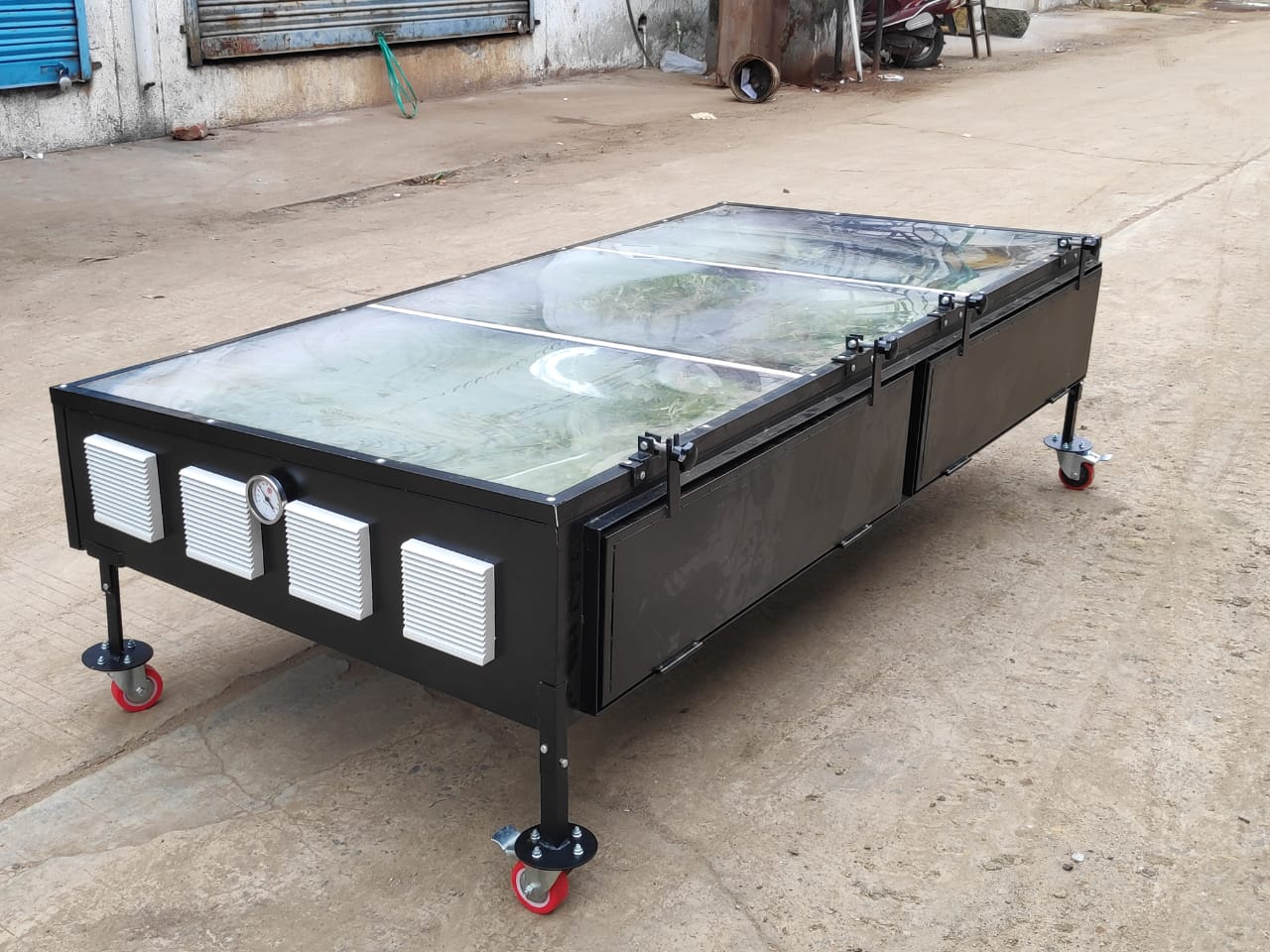
A Commercial Solar Dryer in Madhya Pradesh provides an enclosed and organised method for reducing moisture from suitable agricultural and food products. Prepared material is arranged on food-grade trays inside a protected drying chamber, where solar thermal energy and managed airflow support moisture removal.
Rudra Solar Energy provides customised Commercial Solar Drying Solutions for farmers, Farmer Producer Organizations, Self Help Groups, cooperatives, MSMEs and food-processing industries according to their product, daily quantity, required final output and installation conditions.
Why Madhya Pradesh Needs Organised Solar Drying
Different agricultural products require different post-harvest processes. Grains may need moisture reduction before storage, spices before grinding and packaging, fruits before converting them into dried snacks, and herbs before use in tea, food, wellness or medicinal-product formulations.
Traditional drying can create several challenges:
- Dependence on uninterrupted sunlight
- Exposure to dust and external contamination
- Sudden rain during the drying process
- Night-time moisture absorption
- Uneven heat exposure
- Inconsistent final moisture
- Repeated manual handling
- Requirement for large open spaces
- Difficulty in maintaining hygiene
- Variation between batches
- Reduced suitability for commercial packaging
A Commercial Solar Dryer helps shift the process from direct open exposure to a protected and tray-based system.
The dryer does not replace cleaning, sorting, slicing, cooling, packaging or storage. It works as one important stage in a complete value-addition process.
What Is a Commercial Solar Dryer?
A Commercial Solar Dryer is an enclosed solar thermal system designed to reduce moisture from suitable agricultural produce and food products.
The prepared product is loaded on trays inside the drying chamber. Solar heat increases the internal temperature, while natural or forced airflow helps carry released moisture away from the product.
Depending on the application and system design, a Commercial Solar Dryer may include:
- Enclosed drying chamber
- Solar heat-collection section
- Food-grade drying trays
- Air-inlet and outlet arrangements
- Natural or forced airflow
- Fans where required
- Temperature monitoring
- Humidity monitoring
- Loading and unloading arrangements
- Product-specific tray configuration
One standard dryer cannot be suitable for every crop and every processing business.
A dryer used for soybean or wheat may require different loading and airflow conditions from a dryer used for garlic slices, chilli, fruits, flowers or medicinal leaves. Therefore, the system should be selected according to the main product, fresh quantity, initial moisture, required final moisture and commercial objective.
Commercial Solar Dryer for Farmers in Madhya Pradesh
Farmers often depend on fresh-market sales. During peak harvesting periods, a large quantity of produce may reach the market at the same time, creating pressure to sell quickly.
Perishable products such as fruits, vegetables and leafy materials may also lose quality if they are not processed or marketed on time.
Solar drying can help farmers explore value-added products such as:
- Dried chilli
- Garlic flakes
- Onion flakes
- Dried ginger slices
- Turmeric raw material
- Dehydrated vegetables
- Dried fruit slices
- Herbal ingredients
- Moisture-reduced grains
- Packaged agricultural ingredients
Before selecting a dryer, farmers should evaluate:
- Main crop or product
- Fresh quantity available per day
- Processing season
- Required dried output
- Available labour
- Installation space
- Packaging method
- Storage arrangements
- Target customers
- Future expansion plans
A dryer should be selected as part of a complete processing and marketing plan rather than only according to the availability of raw material.
Solar Dryer for Farmer Producer Organizations
Farmer Producer Organizations can establish common solar-drying and value-addition facilities for their members.
A shared processing centre may include:
- Raw-material collection
- Sorting and grading
- Cleaning or washing
- Peeling, cutting or slicing
- Product-specific preparation
- Tray loading
- Solar drying
- Cooling
- Final moisture checking
- Grading
- Packaging
- Storage and marketing
A common facility can help several farmers use the same infrastructure.
Different crops may be processed in different seasons. For example, grains and pulses may be handled during one period, while chilli, garlic, fruits, vegetables, herbs or medicinal plants may be processed during another.
This can improve equipment utilisation and support the development of locally branded products.
The system capacity should be calculated using actual member produce and a realistic daily processing plan.
Solar Dryer for Self Help Groups and Rural Enterprises
Self Help Groups and rural entrepreneurs can use suitable-capacity solar dryers to develop small food-processing businesses.
Potential products may include:
- Garlic flakes
- Onion flakes
- Chilli products
- Dried vegetables
- Fruit slices
- Herbal tea ingredients
- Moringa products
- Mint and tulsi
- Spice ingredients
- Ready-to-cook mixes
The dryer is only one part of the business.
A successful processing unit should also plan for:
- Raw-material sourcing
- Sorting and preparation
- Hygiene
- Standardised batch handling
- Cooling
- Packaging
- Labelling
- Storage
- Market testing
- Distribution
- Quality control
The selected capacity should match the group’s labour availability, daily raw material and packaging capability.
Commercial Solar Dryer for Food Processing Industries
Food-processing industries require organised, repeatable and hygienic drying.
A Commercial Solar Dryer should be integrated into the complete processing line:
Raw-material receiving → sorting → cleaning → preparation → slicing → tray loading → drying → cooling → grading → packaging → storage
Industrial buyers should evaluate:
- Fresh raw material per day
- Product-preparation capacity
- Required batch size
- Number of batches
- Drying duration
- Expected dried recovery
- Cooling area
- Packaging capacity
- Labour requirements
- Cleaning time
- Product changeover
- Storage conditions
If washing, peeling or slicing capacity is lower than dryer capacity, the system may not be fully utilised. If cooling and packaging arrangements are inadequate, processed material may remain exposed after drying.
Commercial Solar Dryers may support:
- Grain and pulse processors
- Spice-processing units
- Fruit-processing businesses
- Vegetable-dehydration units
- Herbal-product manufacturers
- Food-ingredient suppliers
- Agricultural MSMEs
- FPO processing centres
- Rural food brands
Solar Dryer for Soybean Processing
Soybean is commonly handled for storage, seed use and further processing.
When harvested material contains excess moisture, timely moisture reduction may be necessary before storage or movement to the next processing stage.
For soybean applications, important factors include:
- Initial moisture
- Intended use
- Daily quantity
- Loading depth
- Airflow
- Temperature
- Required final moisture
- Storage plan
The objective is moisture reduction, not roasting or cooking.
For seed use, temperature should be managed carefully because excessive heat may affect seed quality and germination.
The correct dryer configuration should be selected according to the product form and final application.
Solar Dryer for Wheat, Maize and Other Grains
Wheat, maize and other grains may retain moisture after harvesting, particularly during uncertain weather conditions.
Improper moisture management can create difficulties during storage, milling and transportation.
A suitable Commercial Solar Dryer may support:
- Cleaner handling
- Protected drying
- Reduced dependence on open ground
- Better airflow
- Easier batch supervision
- Timely moisture reduction
Important considerations include:
- Grain type
- Initial moisture
- Loading method
- Loading depth
- Airflow
- Drying temperature
- Final moisture
- Intended storage period
Grains should not be shown or treated as cooked, roasted or burnt inside the dryer.
Solar Dryer for Pulses and Lentils
Pulses and lentils may require moisture management before storage, processing or packaging.
Open drying can expose them to dust, insects, birds and sudden weather changes.
A protected solar drying system can support more organised moisture reduction.
The system should be selected according to:
- Product size
- Initial moisture
- Daily quantity
- Tray or loading arrangement
- Airflow
- Final moisture
- Storage requirement
The material should be cleaned and sorted before drying.
After moisture reduction, it should be cooled and packed or stored under appropriate conditions.
Commercial Solar Dryer for Chilli and Spices
Chilli, coriander, turmeric, ginger, garlic and other spices require proper drying before grading, grinding, packaging or storage.
Traditional open drying may expose spices to:
- Dust
- Insects
- Birds
- Roadside pollution
- Sudden rainfall
- Uneven sunlight
- Repeated handling
A Commercial Solar Dryer provides an enclosed environment where spices can be arranged on suitable trays.
Important drying factors include:
- Product variety
- Initial moisture
- Tray mesh
- Loading thickness
- Airflow
- Temperature
- Final moisture
- Cooling
- Packaging
For chilli, colour and appearance are commercially important. For coriander and other small products, suitable tray mesh is necessary. For leafy herbs and aromatic ingredients, gentler conditions may be required.
Solar Dryer for Garlic and Onion Processing
Garlic and onion can be converted into valuable food-processing ingredients.
Garlic Products
- Dried garlic slices
- Garlic flakes
- Garlic granules
- Garlic powder raw material
Onion Products
- Dried onion slices
- Onion flakes
- Onion granules
- Onion powder ingredients
The process may include:
Sorting → cleaning → peeling → slicing → tray loading → drying → cooling → packaging
Uniform slice thickness is important because thick and thin pieces dry at different speeds.
Overloading trays can restrict airflow and create uneven moisture levels.
The dried product should be cooled in a clean environment before packaging.
Solar Dryer for Fruits
Madhya Pradesh has opportunities for processing suitable seasonal fruits into dried and value-added products.
Potential applications may include:
- Mango
- Guava
- Papaya
- Banana
- Amla
- Citrus peel
- Other suitable fruits
Possible outputs include:
- Dried fruit slices
- Dried cubes
- Fruit leather
- Powder ingredients
- Bakery ingredients
- Snack products
- Beverage ingredients
Depending on the fruit, preparation may involve washing, peeling, deseeding, slicing or pre-treatment.
Uniform preparation and correct tray loading help improve batch consistency.
The final product should be cooled before packaging to reduce the possibility of condensation.
Solar Dryer for Vegetables
Commercial Solar Dryers may support dehydration of suitable vegetables such as:
- Onion
- Garlic
- Tomato
- Potato slices
- Carrot
- Beetroot
- Okra
- Leafy vegetables
- Seasonal vegetables
Possible value-added products include:
- Dehydrated vegetable slices
- Vegetable flakes
- Powder ingredients
- Ready-to-cook mixes
- Food-industry ingredients
Some vegetables may require blanching or another preparation step before drying.
Potato slices should be treated as dehydrated raw slices, not fried chips. A solar dryer removes moisture; it does not deep-fry the product.
Solar Dryer for Herbs and Medicinal Plants
Herbs and medicinal plants often require gentle drying because excessive heat may affect colour, aroma, texture and overall quality.
Potential products include:
- Tulsi
- Mint
- Moringa leaves
- Lemongrass
- Curry leaves
- Ashwagandha
- Aloe vera
- Herbal flowers
- Medicinal roots
- Aromatic leaves
The dryer should be selected according to:
- Product sensitivity
- Leaf or root thickness
- Initial moisture
- Loading depth
- Temperature
- Airflow
- Required final product
- Packaging method
Dried herbal materials may be used in:
- Herbal tea
- Wellness products
- Food ingredients
- Powder formulations
- Ayurvedic processing
- Cosmetic ingredients
Cross-contamination and cleaning should be considered when the same dryer is used for multiple products.
Commercial Solar Dryer vs Traditional Open-Sun Drying
Traditional Open-Sun Drying
Products may remain exposed to:
- Dust
- Insects
- Birds
- Animals
- Sudden rain
- Night-time humidity
- Roadside pollution
- Uneven sunlight
- Repeated manual handling
Commercial Solar Drying
A properly selected system may provide:
- Enclosed processing
- Organised tray loading
- Reduced external exposure
- Better protection from sudden weather changes
- Improved airflow
- Easier batch supervision
- Better space utilisation
- Greater suitability for packaged products
Actual drying performance depends on product type, sunlight, initial moisture, loading pattern, airflow and required final moisture.
A solar dryer should not be described as completely weather-independent unless it includes a verified auxiliary heating arrangement.
Benefits of Commercial Solar Drying in Madhya Pradesh
Cleaner Product Handling
An enclosed chamber helps reduce direct exposure to dust, insects, birds and other external contamination.
Better Weather Protection
Products remain inside a protected system during sudden weather changes.
Organised Batch Processing
Tray-based loading makes it easier to arrange, monitor and unload the product.
Agricultural Value Addition
Fresh produce can be converted into dried slices, flakes, ingredients and packaged products.
Reduced Post-Harvest Losses
Timely moisture reduction may help preserve suitable surplus produce when combined with proper processing, packaging and storage.
Renewable-Energy Use
Solar thermal energy provides the primary source of drying heat.
Better Commercial Presentation
Cleaner and more organised handling can support packaged products for retail, wholesale and food-industry buyers.
How to Select the Right Commercial Solar Dryer
Before selecting a solar dryer, buyers should define their actual processing requirement.
Important details include:
- Exact product name
- Fresh quantity per day
- Required batch capacity
- Initial moisture
- Desired final moisture
- Product thickness
- Tray-loading depth
- Processing season
- Installation location
- Required final product
- Packaging plan
- Storage method
- Future expansion requirement
Buyers should also compare:
- Dryer dimensions
- Number of trays
- Tray material
- Food-contact surfaces
- Airflow method
- Electricity requirement
- Temperature monitoring
- Humidity monitoring
- Construction quality
- Cleaning requirements
- Installation scope
- Operator training
- After-sales support
Two dryers with similar outer dimensions may have different tray areas, airflow systems and usable capacities.
Purchase decisions should therefore not be based only on the lowest price.
Importance of Site and Installation Planning
The installation location affects system operation.
The selected site should have:
- Suitable sunlight exposure
- Minimum shading
- Safe foundation
- Proper drainage
- Loading and unloading space
- Access for cleaning
- Raw-material preparation area
- Cooling and packaging space
- Safe electrical arrangements where required
- Protection from water accumulation
Site photographs, measurements and project details can help in recommending a suitable configuration.
Cooling, Packaging and Storage After Drying
Drying is not the final processing stage.
After drying:
- Remove the trays carefully.
- Allow the product to cool in a clean area.
- Check the final moisture.
- Sort or grade the material.
- Pack it in suitable moisture-resistant packaging.
- Store it under appropriate conditions.
Packing warm material may create condensation inside the package.
Shelf life depends on:
- Final moisture
- Product hygiene
- Packaging material
- Storage temperature
- Storage humidity
- Exposure to air
- Product characteristics
A Commercial Solar Dryer supports moisture reduction, but correct cooling, packaging and storage remain essential.
Why Choose Rudra Solar Energy?
Rudra Solar Energy provides customised Commercial Solar Drying Solutions for farmers, FPOs, Self Help Groups, cooperatives, MSMEs and food-processing industries.
The process begins with understanding the customer’s actual product and processing objective.
Rudra Solar Energy can support customers through:
- Product requirement analysis
- Capacity planning
- System recommendation
- Product-specific customisation
- Manufacturing
- Installation assistance
- Commissioning guidance
- Operator training
- Technical guidance
- After-sales support
The objective is not simply to provide a generic machine.
The objective is to recommend a suitable drying solution according to the customer’s:
- Product
- Fresh daily quantity
- Initial and final moisture
- Required output
- Installation space
- Processing season
- Packaging plan
- Commercial objective
- Future expansion requirement
How to Request a Solar Dryer Recommendation in Madhya Pradesh
To receive a suitable recommendation, customers should share:
- Product name
- Fresh quantity per day
- Required batch capacity
- Project location in Madhya Pradesh
- Current drying method
- Required final product
- Available installation space
- Processing season
- Packaging plan
- Required automation
- Site photographs or videos
- Future expansion plans
Instead of saying:
“I need a solar dryer for agricultural products.”
Provide a detailed requirement such as:
“I want to process 250 kilograms of fresh garlic slices per day in Madhya Pradesh for producing packaged garlic flakes.”
This helps the manufacturer understand the application and recommend a more suitable system.
Conclusion
Madhya Pradesh has strong potential for agricultural value addition through organised solar drying.
Soybean, wheat, maize, pulses, chilli, coriander, garlic, onion, fruits, vegetables, herbs and medicinal plants can benefit from better post-harvest moisture management.
A Commercial Solar Dryer in Madhya Pradesh provides an enclosed alternative to traditional open-sun drying. It can help reduce direct exposure to dust, insects, birds and changing weather while supporting tray-based processing and easier batch supervision.
However, the system should be selected according to:
- Product type
- Fresh quantity
- Initial and final moisture
- Temperature requirement
- Airflow
- Tray design
- Installation area
- Processing season
- Packaging
- Storage
- Commercial objective
Rudra Solar Energy provides customised Commercial Solar Drying Solutions for farmers, FPOs, SHGs, MSMEs and food-processing industries across Madhya Pradesh.
For a suitable recommendation, share your product name, fresh processing quantity per day, project location and required final output with Rudra Solar Energy.