
Telangana has strong potential for agricultural value addition because the state produces a wide range of crops, spices, grains, fruits, vegetables, medicinal plants and food-processing raw materials. Farmers, Farmer Producer Organizations, agricultural cooperatives, Self Help Groups, MSMEs, food-processing businesses and agri-entrepreneurs across Telangana are increasingly exploring better methods to reduce post-harvest losses and convert fresh produce into stable, value-added products.
However, harvesting a good crop is only the beginning.
Agricultural products often contain high moisture after harvesting. If this moisture is not reduced at the right time and under suitable conditions, the produce may lose its natural colour, aroma, texture, hygiene, shelf life and commercial value. Traditional open-sun drying is still widely used, but it exposes products to dust, insects, birds, animals, changing weather, unexpected rain and uneven drying conditions.
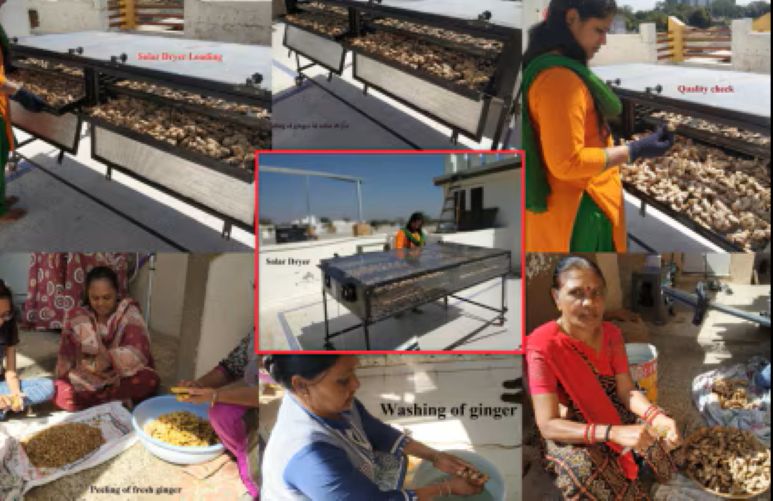
A Commercial Solar Dryer in Telangana provides a cleaner, enclosed and more organised drying environment. It uses solar thermal energy to remove moisture from agricultural produce while protecting the material from direct exposure to external contamination.
Rudra Solar Energy provides Commercial Solar Drying Solutions designed for farmers, FPOs, food-processing industries, spice processors, fruit and vegetable processors, herbal businesses, agricultural institutions and rural enterprises across Telangana.
The system can be configured according to the product, daily quantity, moisture-removal requirement, available installation area and expected final output.
Why Solar Drying Is Important for Telangana
Telangana has a diverse agricultural and food-processing ecosystem. Different regions of the state handle crops such as chilli, turmeric, maize, paddy, millets, pulses, fruits, vegetables, herbs and medicinal plants.
Many of these products are highly suitable for drying and dehydration.
However, traditional drying methods can create several challenges:
- Products may dry unevenly.
- Sudden weather changes can interrupt the process.
- Night-time humidity may increase moisture again.
- Dust and insects can contaminate the material.
- Products may lose colour or aroma.
- Drying may require a large open area.
- Labour may be required for repeated handling.
- Product quality may vary from batch to batch.
- Fresh produce may need to be sold immediately at lower prices.
Commercial Solar Drying can help farmers and processors manage these challenges through an enclosed system where products are arranged on trays and dried using controlled airflow and solar heat.
This makes the process more suitable for commercial value addition and packaged-food production.
What Is a Commercial Solar Dryer?
A Commercial Solar Dryer is an enclosed drying system that uses solar energy to reduce moisture from agricultural produce, food products, spices, fruits, vegetables, herbs, grains and other materials.
The product is placed on organised trays inside a drying chamber. Solar heat increases the temperature inside the system, while airflow carries moisture away from the product.
A Commercial Solar Dryer may include:
- An enclosed drying chamber
- Food-grade drying trays
- Solar heat collection
- Air-inlet and outlet arrangements
- Natural or forced air circulation
- Temperature monitoring
- Humidity monitoring, where required
- Product-loading and unloading arrangements
- Weather-protected construction
The exact design depends on the application.
A dryer used for chilli may require different operating conditions from a dryer used for medicinal herbs, fruits, garlic, onion, millets or grains.
Therefore, capacity and configuration should be selected according to the actual product requirement.
Commercial Solar Dryer for Farmers in Telangana
Farmers often face price pressure during peak harvesting seasons.
When large quantities of fresh produce enter the market at the same time, prices may fall. Farmers may be forced to sell quickly because fresh produce has a limited shelf life.
Solar drying creates an opportunity to process part of the harvest into value-added products.
For example, farmers may convert:
- Fresh chilli into dried chilli
- Turmeric into dried turmeric fingers
- Garlic into dried slices or flakes
- Onion into dried flakes
- Mango into dried slices or powder ingredients
- Banana into dried slices
- Tomato into dehydrated slices or powder
- Moringa leaves into dried leaves or powder ingredients
- Herbs into dried herbal products
- Millets and grains into moisture-stable raw material
Instead of depending only on the fresh market, farmers can explore new buyers such as food processors, spice grinders, wholesalers, packaged-food companies and ingredient manufacturers.
However, the farmer should first identify:
- The product to be dried
- Daily fresh quantity
- Expected dried output
- Processing season
- Packaging requirement
- Target market
- Labour availability
- Available installation space
A properly selected dryer can support long-term value addition, while an incorrectly sized system may remain underutilised.
Solar Dryer for Farmer Producer Organizations in Telangana
Farmer Producer Organizations can use Commercial Solar Dryers as shared post-harvest infrastructure.
Instead of every farmer purchasing separate equipment, an FPO can establish a common processing centre where members bring produce for:
- Sorting
- Cleaning
- Washing
- Peeling
- Cutting
- Slicing
- Tray loading
- Solar drying
- Cooling
- Grading
- Packaging
- Storage
- Bulk marketing
This model can help an FPO process larger volumes and create a common brand.
For example, an FPO may establish a value-addition unit for:
- Chilli
- Turmeric
- Maize
- Millets
- Fruits
- Vegetables
- Garlic
- Onion
- Herbal leaves
- Medicinal plants
A shared drying centre can also help improve equipment utilisation because different products may be processed during different seasons.
Before establishing the facility, the FPO should prepare a detailed production and marketing plan.
Solar Dryer for Food Processing Industries in Telangana
Food-processing industries need organised, consistent and hygienic drying.
A Commercial Solar Dryer can become part of the complete production line:
Raw material receiving → sorting → washing → preparation → slicing → tray loading → drying → cooling → grading → packaging → storage
For an industrial buyer, the dryer must be matched with the capacity of the complete process.
If the dryer is large but the washing, slicing or packaging section is too small, the production line may develop bottlenecks.
Before selecting a system, the industry should calculate:
- Fresh raw material per day
- Number of batches
- Required drying time
- Initial moisture
- Final moisture
- Product recovery
- Packaging capacity
- Labour requirement
- Product-changeover time
- Cleaning procedure
- Storage requirement
Commercial Solar Drying may be suitable for:
- Spice-processing industries
- Fruit-processing units
- Vegetable-dehydration businesses
- Millet-processing companies
- Herbal-product manufacturers
- Food-ingredient suppliers
- Seed-processing businesses
- Agricultural MSMEs
- Export-oriented processing units
Commercial Solar Dryer for Chilli Processing in Telangana
Chilli is one of the most important products for solar drying.
Fresh chilli contains moisture and must be dried properly before grading, storage, grinding or packaging.
Traditional open drying may expose chilli to:
- Dust
- Insects
- Birds
- Rain
- Night-time humidity
- Uneven heat
- Repeated handling
Improper drying may affect colour, appearance, storage quality and commercial value.
A Commercial Solar Dryer can provide an enclosed environment where chilli is arranged on trays and dried using organised airflow.
For better results, processors should consider:
- Chilli variety
- Initial moisture
- Loading depth
- Airflow
- Drying temperature
- Final moisture
- Cooling before packaging
- Moisture-resistant packaging
The system should not overheat or burn the chilli. The goal is controlled moisture reduction while maintaining product quality.
Commercial Solar Dryer for Turmeric Processing
Turmeric requires several processing stages before it becomes market-ready.
Depending on the processing method, turmeric may involve:
- Cleaning
- Boiling or curing
- Draining
- Drying
- Polishing
- Grading
- Packaging
Drying is a critical stage because excessive moisture may affect storage, while improper drying may reduce product quality.
A Commercial Solar Dryer can help turmeric processors organise the drying process inside a protected chamber.
Uniform tray loading and airflow can support more consistent drying compared with uncontrolled open exposure.
Turmeric processors should consider:
- Finger size
- Curing method
- Initial moisture
- Tray loading
- Airflow
- Drying duration
- Final moisture
- Cooling and storage
Properly dried turmeric can be prepared for polishing, grinding and commercial packaging.
Solar Dryer for Maize, Millets and Grains
Grains and cereals may require moisture reduction before safe storage or further processing.
Commercial Solar Dryers can be used for products such as:
- Maize
- Paddy
- Wheat
- Millets
- Sorghum
- Other grains
The purpose is to reduce excess moisture without cooking, roasting or damaging the grain.
Uniform drying can support:
- Safer storage
- Reduced moisture-related deterioration
- Better milling preparation
- More consistent raw material
- Improved processing management
Grains should be spread in an appropriate layer and monitored carefully.
A dryer should not be overloaded, because excessive loading depth may reduce airflow and create uneven drying.
For seed applications, temperature should be managed carefully because excessive heat may affect germination.
Solar Dryer for Fruits in Telangana
Fruits have strong potential for value-added processing because they are highly perishable and often contain high moisture.
Commercial Solar Dryers may be used for:
- Mango
- Banana
- Papaya
- Guava
- Amla
- Pineapple
- Sapota
- Citrus peel
- Other seasonal fruits
Fruits may be processed into:
- Dried slices
- Dried cubes
- Fruit leather
- Powder ingredients
- Herbal blends
- Snack products
- Bakery ingredients
Before drying, fruits may require:
- Sorting
- Washing
- Peeling
- Deseeding
- Slicing
- Pre-treatment
- Tray arrangement
Slice thickness is especially important.
Uneven slices may dry at different speeds, leading to mixed moisture levels within the same batch.
The final product should be cooled before packaging to reduce condensation inside the pack.
Solar Dryer for Vegetable Processing
Vegetables can be converted into stable and marketable dehydrated products.
Suitable products may include:
- Onion
- Garlic
- Tomato
- Potato slices
- Carrot
- Beetroot
- Okra
- Green leafy vegetables
- Drumstick
- Other seasonal vegetables
Possible value-added products include:
- Onion flakes
- Garlic flakes
- Tomato powder ingredients
- Dehydrated vegetable mixes
- Dried leafy vegetables
- Potato slices
- Vegetable powder
- Ready-to-cook ingredients
Vegetables should be washed and prepared hygienically before drying.
Some products may require peeling, slicing, blanching or pre-treatment.
The dryer configuration should match the product’s moisture level and desired final texture.
Solar Dryer for Medicinal and Herbal Products
Telangana also offers opportunities in medicinal plants, herbal ingredients and wellness products.
Commercial Solar Dryers may be used for:
- Tulsi
- Mint
- Moringa leaves
- Curry leaves
- Aloe vera
- Ashwagandha
- Flowers
- Roots
- Herbal leaves
- Aromatic plants
Herbs often require gentle drying because high temperature may affect:
- Natural colour
- Aroma
- Texture
- Volatile compounds
- Product quality
The correct drying temperature and airflow should be selected according to the plant and final application.
Dried herbal material may be used in:
- Herbal tea
- Powder products
- Extract preparation
- Ayurvedic products
- Food ingredients
- Cosmetic ingredients
- Wellness products
Solar Dryer for Spice Processing Businesses
Spice processors need to protect colour, aroma and cleanliness.
Commercial Solar Dryers may support drying of:
- Chilli
- Turmeric
- Coriander
- Ginger
- Garlic
- Curry leaves
- Fenugreek leaves
- Other spices and herbs
The drying system can help prepare the product for:
- Cleaning
- Grading
- Grinding
- Blending
- Packaging
- Storage
Drying should be completed before grinding because excess moisture can reduce powder quality and create storage problems.
A well-planned spice-processing line should include:
- Raw material inspection
- Cleaning
- Washing, where required
- Cutting or preparation
- Drying
- Cooling
- Grinding
- Sieving
- Packaging
Why Open-Sun Drying Creates Limitations
Open-sun drying has been used for generations, but it creates limitations for modern food-processing businesses.
Exposure to Dust
Products spread on the ground, rooftops or open platforms can collect dust and external particles.
Exposure to Insects and Birds
Open produce is difficult to protect completely from insects, birds and animals.
Sudden Rain
Unexpected rain can interrupt drying and increase moisture again.
Night-Time Humidity
Products left outside may absorb moisture during the night.
Uneven Drying
Some parts of the batch may receive more heat than others.
Repeated Handling
The product may need to be moved, covered and uncovered several times.
Large Space Requirement
Open drying may require a large floor area.
Inconsistent Batch Quality
Changes in weather can produce different results from one batch to another.
A Commercial Solar Dryer addresses many of these limitations by providing an enclosed and organised system.
Commercial Solar Dryer vs Traditional Open Drying
A Commercial Solar Dryer does not eliminate the need for proper handling, monitoring and packaging. However, it can make the drying process more controlled and professional.
Compared with traditional open drying, it offers:
- Enclosed processing
- Reduced dust exposure
- Better protection from insects and birds
- Protection from sudden rain
- Organised tray loading
- Improved space utilisation
- Better monitoring
- More consistent airflow
- Cleaner product handling
- Greater suitability for commercial processing
The actual drying time and result depend on:
- Product type
- Initial moisture
- Slice thickness
- Tray loading
- Weather
- Airflow
- Temperature
- Final moisture requirement
Benefits of Commercial Solar Drying in Telangana
Reduced Post-Harvest Losses
Timely drying can help reduce avoidable deterioration caused by excess moisture.
Improved Hygiene
An enclosed drying chamber reduces direct exposure to external contaminants.
Better Product Consistency
Organised trays and airflow can support more uniform drying.
Longer Storage Potential
Reducing moisture to a suitable level can support longer storage when combined with correct packaging.
Lower Dependence on Conventional Fuel
Solar thermal energy may reduce dependence on electricity, LPG, diesel, firewood or other conventional fuels.
Value-Added Product Development
Farmers and businesses can develop dried, packaged and processed products instead of selling only fresh produce.
Better Market Opportunities
Dried products may be supplied to:
- Food processors
- Wholesalers
- Retailers
- Hotels
- Institutional kitchens
- Ingredient manufacturers
- Packaged-food companies
- Export-oriented buyers
Reduced Pressure to Sell Immediately
Drying can provide more time for storage and marketing compared with highly perishable fresh produce.
Solar Energy and Sustainable Food Processing
Commercial Solar Drying uses a renewable energy source that is widely available.
This can support businesses that want to:
- Reduce dependence on conventional fuel
- Improve energy efficiency
- Develop cleaner processing practices
- Reduce food waste
- Promote sustainable agriculture
- Create rural value-addition businesses
However, solar drying performance depends on weather conditions and system design.
Some commercial applications may require supporting fans, controls or auxiliary systems.
The correct configuration should be selected according to the customer’s production requirement and operating season.
How to Select the Right Commercial Solar Dryer in Telangana
Identify the Product
Clearly specify the main product.
Do not simply say “agricultural produce.”
A dryer for chilli may not have the same configuration as a dryer for fruits, herbs or grains.
Calculate Daily Fresh Quantity
Capacity should be based on fresh raw material per day.
Mention:
- Daily quantity
- Peak-season quantity
- Number of batches
- Operating hours
- Expected dried output
Understand Moisture Reduction
The manufacturer should know:
- Initial moisture
- Desired final moisture
- Product thickness
- Expected drying time
- Final texture
Confirm Pre-Processing
The product may require:
- Washing
- Peeling
- Cutting
- Slicing
- Blanching
- Curing
- Deseeding
- Pre-treatment
Evaluate Available Space
Measure:
- Installation area
- Entry access
- Loading area
- Unloading area
- Cleaning area
- Packaging area
- Storage area
Check Sunlight Availability
The installation location should receive suitable sunlight and should not remain heavily shaded.
Decide the Required Capacity
The dryer should match actual production.
A system that is too small may create delays, while an oversized system may remain underutilised.
Review Technical Specifications
Before purchasing, ask for:
- Dryer dimensions
- Tray quantity
- Tray material
- Loading capacity
- Airflow method
- Power requirement
- Monitoring system
- Installation scope
- Transportation
- Training
- Warranty
- After-sales support
Importance of Food-Grade Trays
Food-contact surfaces should be suitable for the intended product.
Drying trays should be:
- Easy to clean
- Suitable for food contact
- Strong enough for repeated use
- Designed for airflow
- Appropriate for the product size
- Removable where required
The mesh or perforation size should prevent smaller products from falling through while allowing sufficient airflow.
For herbs, seeds or small spices, tray design becomes especially important.
Role of Airflow in Solar Drying
Heat alone cannot complete the drying process.
As the product releases moisture, humid air must move out of the chamber.
Poor airflow may result in:
- Slow drying
- Wet spots
- Uneven batches
- Condensation
- Over-drying in some areas
- Moisture retention in other areas
Depending on the application, the dryer may use:
- Natural convection
- Forced airflow
- Fans
- Adjustable vents
- Air-inlet and outlet systems
The airflow should be designed according to the product, loading depth and chamber size.
Temperature and Moisture Monitoring
Monitoring can help operators improve batch consistency.
Depending on the product and system, monitoring may include:
- Chamber temperature
- Product temperature
- Relative humidity
- Drying time
- Final moisture
- Weather conditions
Commercial processors should develop a standard operating procedure for each product.
The procedure may include:
- Product preparation
- Slice thickness
- Tray loading
- Drying temperature
- Drying duration
- Tray rotation, where required
- Final moisture test
- Cooling
- Packaging
This helps produce more repeatable results.
Cooling and Packaging After Drying
Drying is not the final step.
The product must be cooled before packaging.
If a warm product is packed immediately, condensation may develop inside the package.
This can increase moisture again and reduce storage stability.
After drying:
- Remove the trays carefully.
- Allow the product to cool in a clean environment.
- Check final moisture.
- Grade the product.
- Pack in suitable moisture-resistant packaging.
- Store in a cool and dry place.
Packaging should be selected according to:
- Product type
- Shelf-life requirement
- Target market
- Storage conditions
- Pack size
- Exposure to humidity
Commercial Solar Dryer for MSMEs and Agri-Startups
MSMEs and agri-startups can use solar drying to create innovative food products.
Possible business ideas include:
- Dehydrated fruit snacks
- Herbal tea ingredients
- Vegetable powders
- Garlic and onion flakes
- Dried chilli
- Turmeric products
- Millet ingredients
- Moringa powder
- Dried curry leaves
- Dried tomato
- Ready-to-cook mixes
- Natural food ingredients
Before investing, the business should validate:
- Raw material availability
- Product demand
- Selling price
- Packaging cost
- Licensing requirements
- Distribution channel
- Processing capacity
- Expected utilisation
The dryer should be part of a complete business model, not treated as an isolated machine.
Commercial Solar Dryer for Self Help Groups
Self Help Groups can use suitable-capacity solar dryers for small-scale food-processing activities.
Potential products include:
- Dried vegetables
- Fruit slices
- Herbal tea
- Moringa products
- Curry leaves
- Garlic flakes
- Onion flakes
- Spice ingredients
- Millet products
A group-based system can create local employment and support rural entrepreneurship.
The selected capacity should match the group’s:
- Labour
- Raw material
- Working hours
- Packaging ability
- Market demand
Training is important so that operators understand hygiene, tray loading, drying and packaging.
Common Mistakes to Avoid
Choosing Only by Lowest Price
The lowest price may not include suitable capacity, food-grade trays or proper airflow.
Buying Without a Market Plan
The final dried product and buyer should be identified before purchasing.
Overloading Trays
A thick product layer can slow drying and reduce uniformity.
Using Uneven Slices
Different slice thicknesses may produce mixed moisture levels.
Ignoring Packaging
Dried products can absorb moisture again if packaging is poor.
Installing in a Shaded Area
Poor sunlight exposure may reduce performance.
Processing Incompatible Products Together
Different products may require different temperatures and drying times.
Ignoring Cleaning
The dryer and trays should be cleaned between batches.
Expecting One Setting for Every Product
Each product may require a different drying process.
Why Choose Rudra Solar Energy?
Rudra Solar Energy provides Commercial Solar Drying Solutions for farmers, FPOs, SHGs, cooperatives, MSMEs, food-processing industries and agricultural organisations.
The process begins with understanding the customer’s actual requirement.
Important details include:
- Product name
- Fresh quantity per day
- Initial moisture
- Required final output
- Installation location
- Available space
- Processing season
- Current drying method
- Target market
- Future expansion
Based on these details, a suitable drying configuration can be recommended.
Rudra Solar Energy supports customers through:
- Requirement analysis
- Capacity planning
- System design
- Manufacturing
- Product-specific customisation
- Installation support
- Commissioning guidance
- Operator training
- After-sales support
The objective is to provide a practical drying solution that supports cleaner processing, reduced losses and agricultural value addition.
Commercial Solar Dryer Applications Across Telangana
Commercial Solar Dryers can support agricultural and food-processing activities across urban, rural and industrial regions of Telangana.
Potential applications include:
- Chilli-processing units
- Turmeric processors
- Maize and grain businesses
- Millet processors
- Fruit-processing units
- Vegetable-dehydration businesses
- Herbal-product companies
- FPO processing centres
- SHG food businesses
- Agricultural universities
- Research organisations
- Government-supported projects
- Food ingredient manufacturers
- Export-oriented processors
The correct system should be selected according to product availability, market demand and processing capacity.
How to Request a Commercial Solar Dryer Quotation in Telangana
To receive a suitable technical recommendation, buyers should share:
- Product name
- Fresh quantity per day
- Expected dried output
- Current drying method
- Required final product
- Project location in Telangana
- Available installation area
- Processing season
- Packaging plan
- Required automation
- Site photographs or videos
- Future capacity plans
Instead of saying:
“I need a solar dryer.”
Share a more specific requirement such as:
“I want to dry 250 kilograms of fresh chilli per day in Telangana for grading and commercial packaging.”
This helps in selecting a more suitable configuration.
Building Stronger Agricultural Value Chains in Telangana
Commercial Solar Drying can help strengthen the link between agriculture and food processing.
Farmers can move beyond selling only fresh produce. FPOs can establish shared value-addition centres. SHGs can create small food businesses. MSMEs can develop branded products. Food-processing industries can reduce dependence on open drying.
The broader benefits may include:
- Reduced post-harvest losses
- Better utilisation of surplus produce
- More organised processing
- Rural employment
- New packaged-food products
- Improved storage potential
- Better market access
- Greater use of renewable energy
The actual outcome depends on correct product selection, proper drying, packaging, quality control and market planning.
Conclusion
Telangana has strong potential for Commercial Solar Drying because of its diverse agricultural production, food-processing ecosystem and growing interest in value-added products.
Chilli, turmeric, maize, millets, fruits, vegetables, herbs, medicinal plants and other products can be processed using suitable Solar Drying Solutions.
A Commercial Solar Dryer provides an enclosed and organised alternative to open-sun drying. It can reduce direct exposure to dust, insects, birds and sudden weather while supporting better airflow and batch management.
However, the right system must be selected according to:
- Product type
- Fresh quantity
- Moisture level
- Final output
- Tray requirement
- Drying temperature
- Available space
- Processing season
- Packaging plan
- Market demand
Rudra Solar Energy provides customised Commercial Solar Drying Solutions in Telangana for farmers, FPOs, SHGs, MSMEs and food-processing industries.
Whether the requirement is for chilli, turmeric, maize, millets, fruits, vegetables, herbs or another agricultural product, the correct drying solution can help reduce losses, improve processing hygiene and create new value-addition opportunities.
Rudra Solar Energy helps agricultural and food-processing businesses move from traditional open drying toward cleaner, organised and sustainable Commercial Solar Drying Solutions in Telangana.