India
08048047673
+917777972332
Solar Dryer by Rudra Solar Energy

Solar Drying of Animal Feed

Phone Number

08048047673

Please keep 0 before dialling the number.

Email Address rudrasolar@gmail.com

Mon-Thu: 10 AM - 2 PM • Fri: 3 PM - 7AM

Other Website Visit our other website
Address HiranyaGarbha, Plot No 7, Siddhi Industrial Estate 2, Dhamatvan Undrel Road At and post Dhamatvan, Ta Dsakroi, Dist,

India, India, 382435
Description

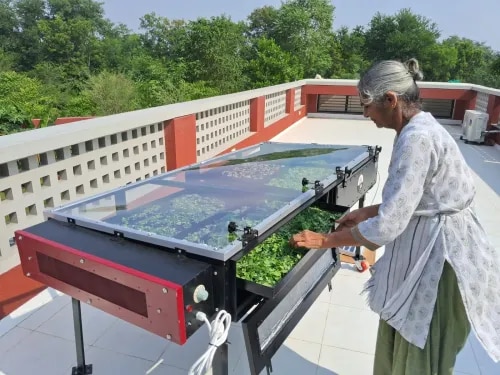
Solar Drying of Animal Feed is an enclosed solar drying application for controlled moisture reduction in suitable feed ingredients, fodder materials, forage crops, leaves, grains and selected agricultural by-products before storage, grinding, blending or further feed processing. Animal-feed materials differ considerably in moisture content, particle size, bulk density, fibre content and intended end use. Fresh fodder leaves, grains, crop residues and processed feed ingredients therefore should not be dried using one fixed temperature, layer depth or drying duration. An enclosed solar drying system uses solar thermal energy together with managed airflow to remove moisture from the loaded material. Depending on system design, solar-powered DC fans may assist forced air circulation, while the enclosed chamber can reduce direct exposure to dust, insects, birds and uncontrolled outdoor contact. Actual drying performance depends on feed material, initial and required final moisture, chopping or preparation, layer thickness, loading density, airflow, temperature, relative humidity, solar radiation and local weather. Feed safety and storage requirements should also be considered, because drying alone does not make unsuitable or contaminated material safe for animal consumption. Solar drying can support livestock farmers, dairy farms, FPOs, fodder processors, feed manufacturers, cooperatives and agro-processing enterprises seeking controlled moisture management for suitable feed materials and agricultural by-products.

Specifications

Application Solar Drying of Animal Feed and Fodder Materials
Feed Safety Consideration Raw-Material Quality, Contamination Control, Appropriate Moisture Endpoint and Applicable Feed-Safety Requirements Should Be Maintained
Typical Users Livestock Farmers, Dairy Farms, FPOs, Cooperatives, Fodder Processors, Feed Manufacturers and Agro-Processing Enterprises
Important Drying Factors Feed Material, Initial Moisture, Target Moisture, Preparation, Layer Depth, Loading Density, Airflow, Humidity, Solar Radiation and Weather
Drying Process Enclosed Solar Drying with Controlled Airflow
Suitable Materials Fodder Leaves, Forage Crops, Grains, Feed Ingredients, Selected Crop Residues and Other Suitable Agricultural Feed Materials

Other Products

view all

6814772a5d263414004dd4a4 Card 2

product image
Solar Dryer

Solar Drying for Food Processing Industry is an enclosed solar drying application for controlled moisture reduction in suitable food ingredients and agricultural raw materials before further processing, storage, grinding, blending, packaging or value addition. Applications can include selected fruits, vegetables, herbs, spices, grains, pulses, seeds, medicinal materials and other compatible food-processing inputs according to their individual drying requirements. Food-processing materials differ significantly in moisture content, physical structure, density, preparation method and temperature sensitivity. A sliced fruit, leafy herb, spice rhizome, grain or seed therefore should not be dried using one universal temperature, loading pattern or fixed drying time. An enclosed solar drying system uses solar thermal energy together with managed airflow to remove moisture from the loaded product. Depending on system design, solar-powered DC fans may support forced air circulation, while the enclosed chamber can reduce direct exposure to dust, insects, birds and uncontrolled outdoor contact compared with open-sun drying. Actual drying performance depends on the commodity, initial and target moisture, washing or preparation, cutting or slicing, layer thickness, tray loading, airflow, temperature, relative humidity, solar radiation and local weather. Drying should be integrated with appropriate hygiene, food-safety, packaging and storage practices according to the final product. Solar drying can support food-processing MSMEs, startups, FPOs, SHGs, ingredient manufacturers, spice and herb processors, fruit and vegetable processors and commercial agro-processing enterprises seeking renewable-energy-based moisture management and value addition.

6814772a5d263414004dd4a4 Card 2

product image
Solar Dryer

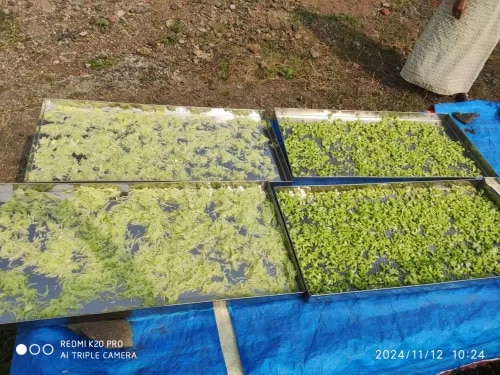
Solar Drying of Tea Leaves is an enclosed solar drying application for controlled moisture reduction in suitable tea leaves and tea-related botanical materials where solar drying fits the required processing method. It can be considered for selected green tea, herbal tea, specialty tea and other appropriate leaf-processing applications after evaluating the required product quality and manufacturing sequence. Tea leaves are highly sensitive to moisture, temperature, airflow and processing conditions. Drying should also be distinguished from withering: withering is an earlier moisture-reduction and physical-conditioning stage in many tea-manufacturing processes, while final drying is used to reduce moisture further and stabilise the processed tea. The exact sequence depends on the type of tea being produced. An enclosed solar drying system uses solar thermal energy with managed airflow. Depending on system design, solar-powered DC fans may support forced air circulation while the chamber helps reduce direct exposure to dust, insects and uncontrolled outdoor contact. Actual drying performance depends on tea type, leaf condition, initial and target moisture, previous processing steps, layer depth, tray loading, airflow, temperature, relative humidity, solar radiation and weather. Excessive or unsuitable heat can affect colour, aroma and other quality characteristics, so one universal drying temperature or time should not be applied to all tea products. Solar drying can support tea growers, small tea processors, herbal tea producers, SHGs, FPOs and specialty-product enterprises where the drying process is technically appropriate for the intended tea product.

6814772a5d263414004dd4a4 Card 2

product image
Solar Dryer

Solar Drying of Animal Feed is an enclosed solar drying application for controlled moisture reduction in suitable feed ingredients, fodder materials, forage crops, leaves, grains and selected agricultural by-products before storage, grinding, blending or further feed processing. Animal-feed materials differ considerably in moisture content, particle size, bulk density, fibre content and intended end use. Fresh fodder leaves, grains, crop residues and processed feed ingredients therefore should not be dried using one fixed temperature, layer depth or drying duration. An enclosed solar drying system uses solar thermal energy together with managed airflow to remove moisture from the loaded material. Depending on system design, solar-powered DC fans may assist forced air circulation, while the enclosed chamber can reduce direct exposure to dust, insects, birds and uncontrolled outdoor contact. Actual drying performance depends on feed material, initial and required final moisture, chopping or preparation, layer thickness, loading density, airflow, temperature, relative humidity, solar radiation and local weather. Feed safety and storage requirements should also be considered, because drying alone does not make unsuitable or contaminated material safe for animal consumption. Solar drying can support livestock farmers, dairy farms, FPOs, fodder processors, feed manufacturers, cooperatives and agro-processing enterprises seeking controlled moisture management for suitable feed materials and agricultural by-products.